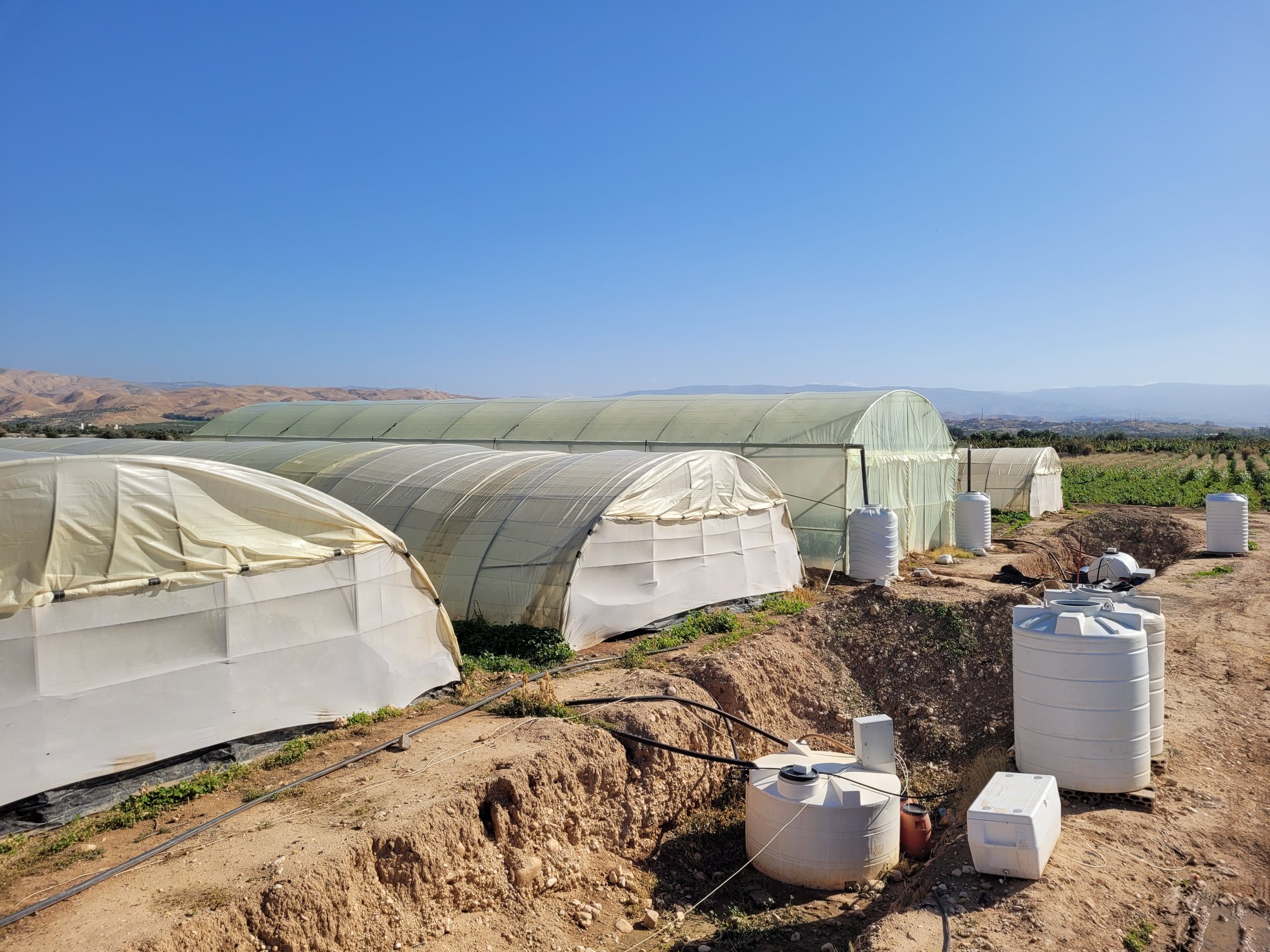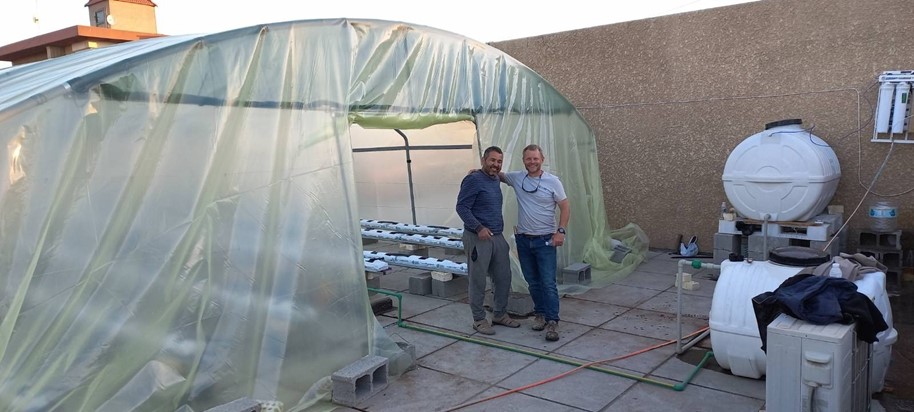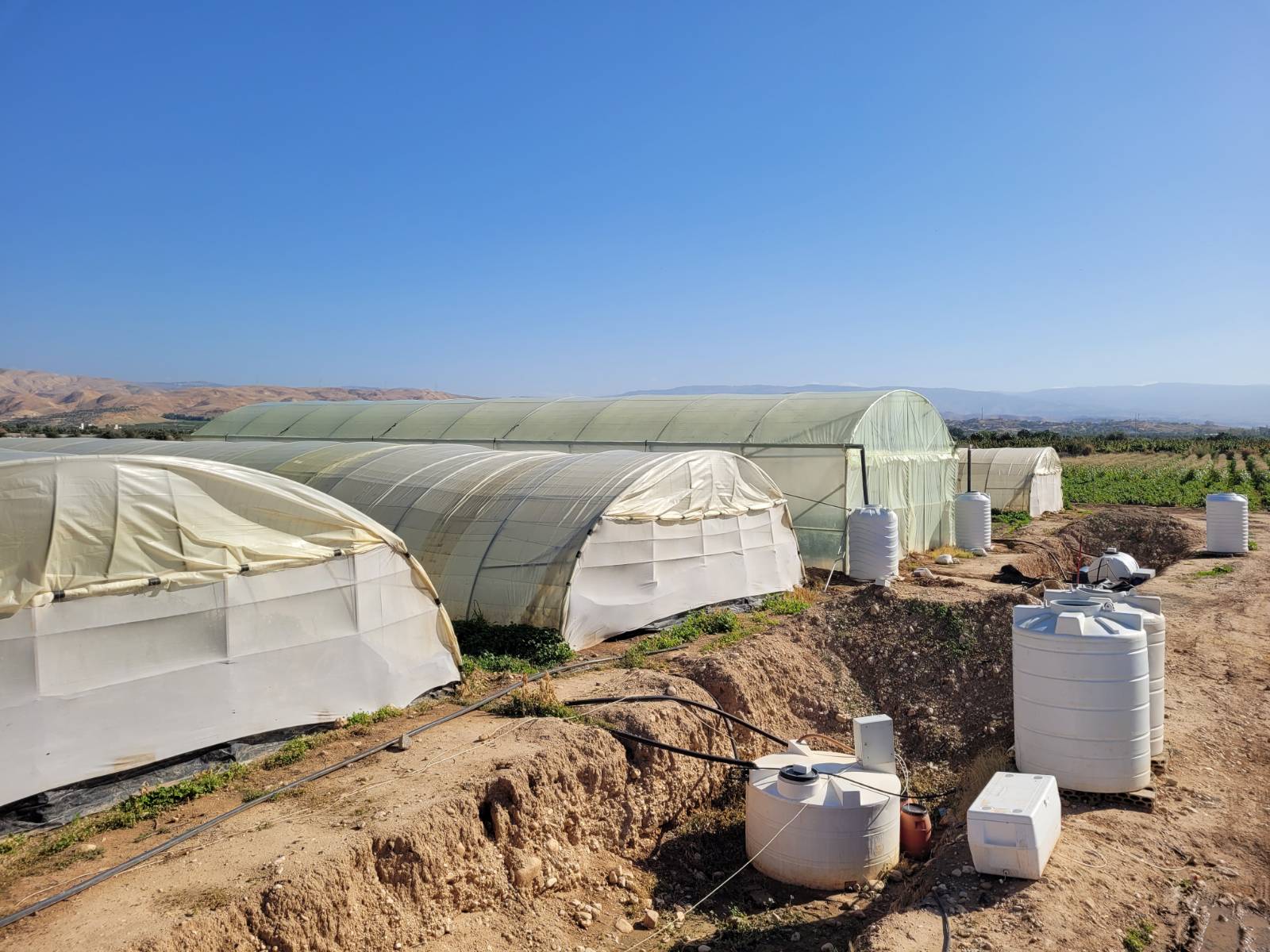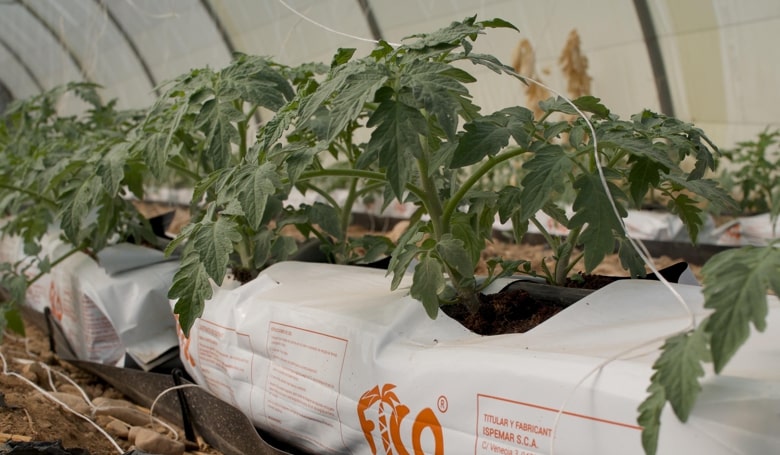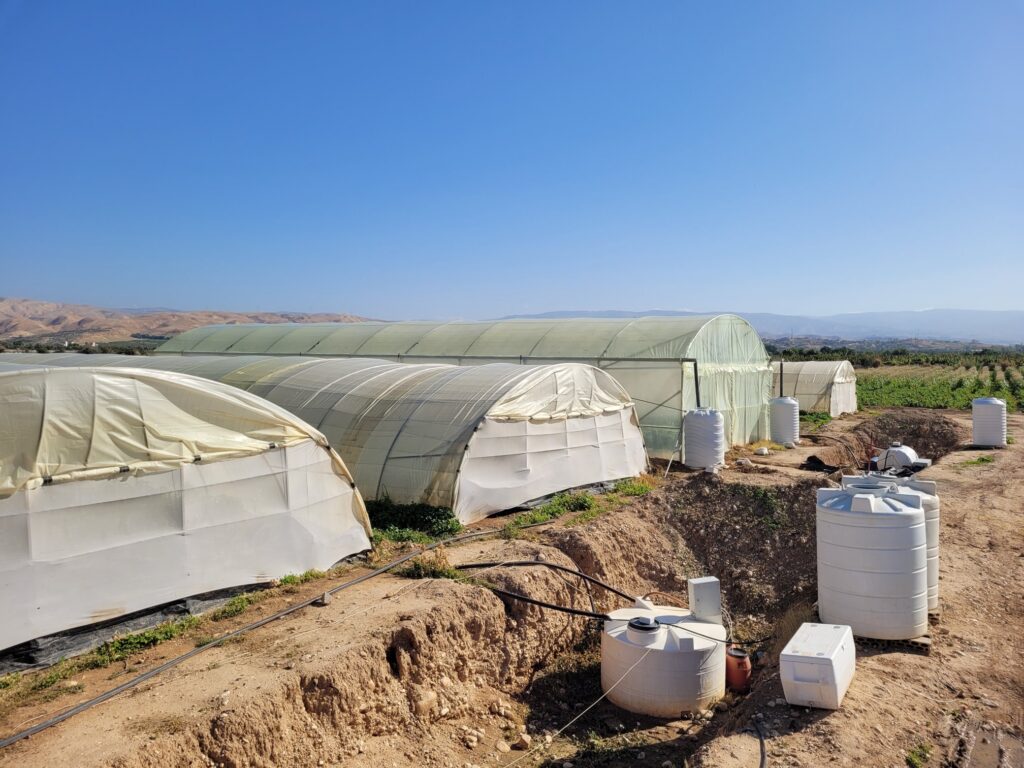
Through our Agricultural Cooperation for Development (AC4D) project in Jordan, the introduction of a new type of greenhouse to the Jordan Valley is proving effective in yielding more peppers per unit of water and producing food significantly faster than traditional greenhouses. This is largely due to better climate control. The poly-tunnels that have traditionally been used do not breathe well when opened, nor do they seal effectively against the cold when closed. Poly-tunnels also accumulate moisture, which inhibits rapid plant growth and causes mold and flower loss—the precursors to fruit.
From a community engagement standpoint, the new greenhouse is allowing us to demonstrate to local smallholders what is possible through a relatively small, though less well-known, investment in agricultural infrastructure. The scaled demonstration of accessible and well-established techniques and technologies adds value to the local farmers’ knowledge base and expands their vision of what is possible. This is one of the practical ways we serve this community.