Wow, 30 years! That means I am starting to be quite old, I guess – no, seriously, how did that happen?
I remember well joining Operation Mercy and then working through a partner organisation in Uzbekistan from September 1996. I thought it would be for two, maybe three years.
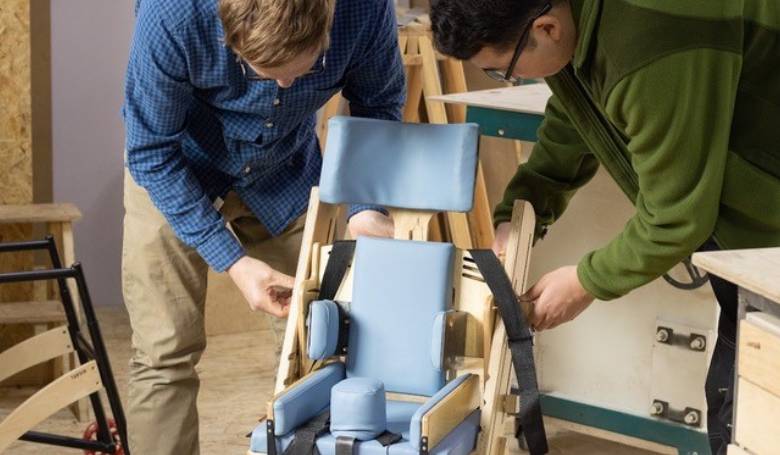
I was working as a paediatric physiotherapist in a centre for children with special needs in Germany, but my heart, and often my mind, was out there, reading and watching documentaries about countries I had never been to, people I had never met, and cultures that were exciting or strange. I longed to be part of something bigger, something that gave back to the world some of all the good I had experienced in Germany and in my family.
Then I received an information letter from Operation Mercy. I had run into Bertil Engqvist, our founder, a few years before, right after OPM started in Iraq, but I had not heard much from them. But here it was – a new team in Uzbekistan working with children with disabilities, mainly those who were blind or visually impaired, but open to more.
So, I wrote the first email of my life in autumn 1995 to Bertil – and 12 months later, I was on my way.
Supported by many friends and the community here at home, who gave, and have continued to give, donations for my salary and many other things, and under their blessing and with their prayers, I stepped out into a new world.
The initial year was a struggle. Getting permission for the project in Khiva was nearly impossible, so I spent my first year working in an orphanage for children with disabilities in Tashkent. The horrors of this place shaped my understanding and strengthened my conviction that we always need to work towards community-based solutions for vulnerable people.
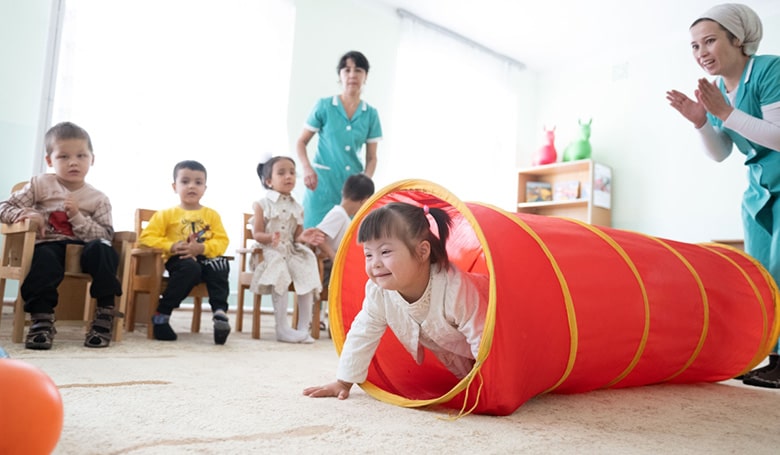
And so, we finally started a Community-Based Rehabilitation project for children with disabilities in 1998. I was learning Uzbek and had the time of my life, so after two years there was no question that I would extend my commitment to this work.
An inclusive education project – an absolutely pioneering idea for Uzbekistan at the time – followed, in close partnership with the Ministry of Education and UNESCO. I, and all of us, learned sometimes by trial and error, but we constantly saw partnerships and communities develop.
Besides the work with people with disabilities, Operation Mercy Uzbekistan became involved with artisan businesses. Encouraged by our friends at UNESCO, we started a joint project to revive Timurid silk carpet designs and established a cooperative training vulnerable women from all over the Khiva municipality in this ancient craft. The cooperative is still producing some of the most stunning carpets you will find in Central Asia, so when you visit Khiva, make sure you stop by.
In 2005, the work in Uzbekistan came to an abrupt end. The country was in political turmoil, and NGOs and community-based initiatives were no longer appreciated. My visa, along with those of many others, was revoked.
After nine years in the beautiful city of Khiva, I felt like someone had pulled the rug out from under my feet. Back in Germany, I felt like a refugee. Friends, home and work were all somewhere else.
The year before, I had taken a taster course at University College London in Inclusive Education, as part of a Master's degree in “International Community Disability Studies”. So, feeling angry with God and the world, and not ready to start anything else new in a different country – or just stay “home” – I enrolled in this Master's programme.
It became, besides the actual debriefing and processing with professional people, a bit of therapy for me. Eighteen months to reflect on what we had built in Uzbekistan, discover the theoretical foundations for much of what we had learned by doing and experimenting, get to know people doing similar work in other parts of the world, and finally conduct my research into access to education for children with disabilities in Central Asia. My time in London became a season of healing and learning.
In autumn 2007, I went on a bit of a Central Asia tour, disseminating my research findings and seeking direction for where to go next. Where did Operation Mercy want me to do something with my new knowledge and experience? Did God have a plan for me – somewhere else where I could show His love to people?
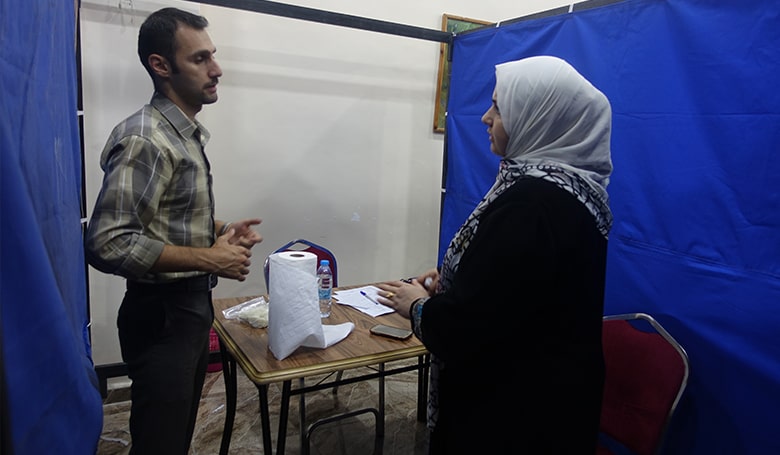
Visiting Operation Mercy offices in Azerbaijan, other NGOs in Turkmenistan, the large but struggling branch in Tajikistan, and finally the programme for people with spinal cord injuries after the earthquake in Bam, Iran, was an amazing experience.
And, to my own surprise, it seemed that Tajikistan – the team I thought was the most stable and experienced – was where I was needed most. The branch office had survived a major crisis, but the director had left the team. A new direction and vision were needed.
Well, casting vision and pioneering new directions has always been my favourite thing. So, once more, I signed up for two or three years, starting in March 2008 – or so I thought.
In 2010, just as we were making some good progress with our new strategies, Tajikistan was hit by a polio outbreak. Suddenly, my technical knowledge as a physio and my passion for community-based services for children with disabilities and their families were needed again.
I had several conversations with the Ministry of Health over the first two years in the country, sharing my research and advocating for CBR, but without success. So, I had started focusing on general leadership and organisational development questions instead.
Now, suddenly, the government was on the phone: “Andrea – you always talk about community-based services. We need that. Do your thing!”
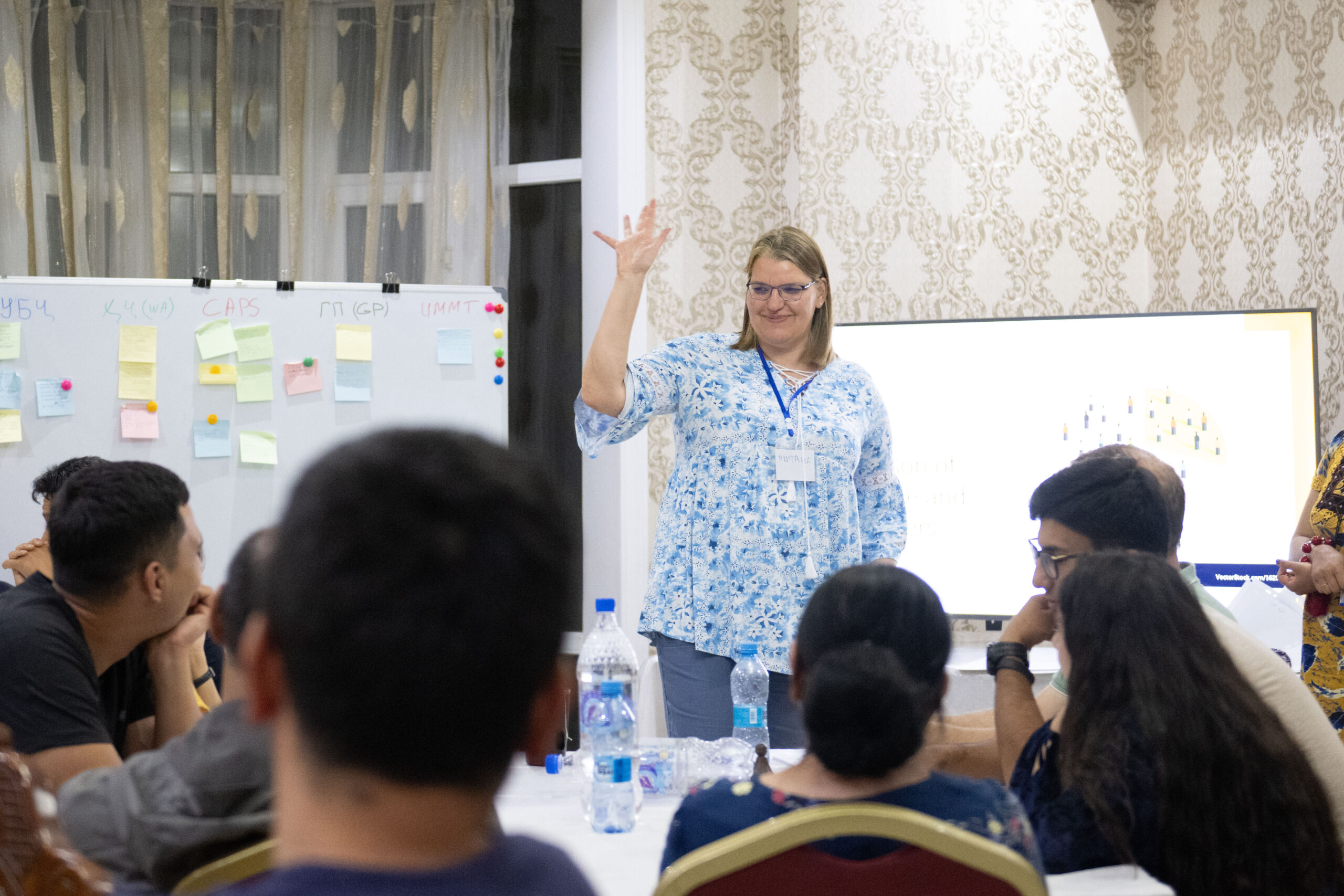
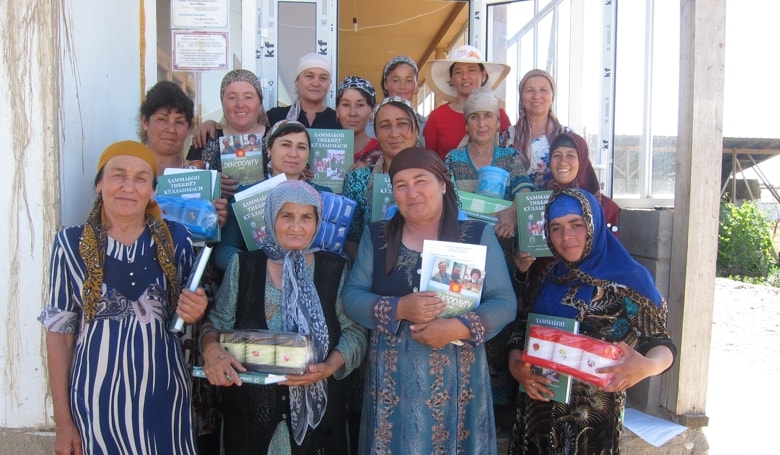
What followed were surely the two most professionally exciting years of my career as an international disability specialist: collaboration with UNICEF and other large disability-focused NGOs; training for parents, nurses, doctors and teachers all over the country; and an understanding that I had been hiding in my office, afraid that if I got too close to the people of Tajikistan and fell in love with another country, leaving would be just as painful as it was in 2005.
God kicked me out of my office and into the community. I had to use and learn Tajik – sit in Tajik homes, speak to people, cry and pray with them. I reconnected with the people I had come to serve, rather than sitting at a desk.
Don’t misunderstand me – I love the leadership and big-picture work, which I do now as International Director as well. But occasionally, it is wonderful to be reminded of whom we do all this work with: the local people and the local community.
Many other exciting things happened in Tajikistan. We were part of the first-ever wheelchair basketball tournament, built greenhouses in the Pamir at an altitude of 2,000 metres, empowered local NGOs and associations, built capacity in schools and communities, and saw hope restored in many places.
In 2018, ten years after I arrived, it was time to say goodbye and return to my home country, Germany. This time, it was my own timing, and I was well prepared.
The plan was to join the international office in the programme team, but within a year, the OPM Board approached me about the International Director role. Had I ever thought about it or dreamed about filling that role? Yes – but not really this soon.
After much talking, discerning and praying, and finding out that I could stay in Germany, where I wanted to support my family, I said yes.
In September 2019, I took on the role as the third International Director of Operation Mercy.
Right now, I am actually on sabbatical. If all goes well and the Board agrees, I am a little over halfway through my maximum of three terms as ID. I am using this time to evaluate my work so far, especially the organisational change process we went through during my first four years as Director.
Looking back, there is a new understanding of what makes us fragile at times, as leaders and as organisations, but also of how we adapted, changed and responded to new circumstances and needs – staying agile and true to our vision to restore hope, build capacity and promote community.
And so, I am excited by what I am discovering and learning, for our Operation Mercy community and for others in our networks and partnerships.
I am looking back on 30 years of learning and experiences – sometimes rough or even painful but always enriching in the end. Thirty years of fantastic teamwork, friendships across cultures and national boundaries, and, in many ways, an additional family. Children and people, I have seen grow up in many places.
I am glad and grateful to all of you who have been part of this journey, and to our faithful God, who has carried me through when it was hard.
Looking forward to the next season with you all and Operation Mercy.
Yours,
Andrea, August 2026